Driven by the global energy transition and the carbon peaking and carbon neutrality goals, hydrogen energy has become one of the core pathways for decarbonizing the transportation sector. The large-scale deployment of hydrogen fuel vehicles and hydrogen refueling stations relies heavily on well-established technical standards and certification systems. This article reviews the core certification standards related to both, analyzes their applicable scenarios and technical differences, explores the development trends of certification, and, combined with FITOK's practical applications, provides compliance guidance for industry practitioners.
Core Classification of Certification Systems and Standard Analysis
Certification systems for hydrogen fuel vehicles and hydrogen refueling stations are built around two central objectives: "hydrogen safety in vehicles" and "reliability of refueling infrastructure." Through continuous development, these standards have gradually demonstrated clear trends toward regional coordination and international integration.
| |
| Category |
Regulation/Standard No. |
Name |
Applicable Region |
| Hydrogen Fuel Vehicles |
EC 79/2009 |
Type-approval of hydrogen-powered motor vehicles |
European Union |
| UN R134 |
Uniform provisions concerning the approval of motor vehicles and their components with regard to the safety-related performance of hydrogen-fuelled vehicles |
Global |
| CSA/ANSI HGV 3.1 |
Fuel system components for compressed hydrogen gas powered vehicles |
North America |
| ISO 19887-1:2024 |
Gaseous Hydrogen — Fuel system components for hydrogen-fuelled vehicles—Land Vehicles |
Global |
| Hydrogen Refueling Stations |
CSA/ANSI HGV 4 Series |
Gaseous hydrogen - Fuelling stations |
North America |
| ISO 19880 Series |
Gaseous hydrogen - Fuelling stations |
Global |
| GB 50516 |
Technical code for hydrogen fuelling station |
China |
Certification Standards for Hydrogen Fuel Vehicles
1. EC 79/2009 (EU Type-Approval Regulation for Hydrogen-Powered Vehicles)
The EU issued the first type-approval regulation specifically dedicated to hydrogen-powered vehicles, Regulation (EC) No. 79/2009, in 2009, covering 11 categories of key components for liquid hydrogen systems and 16 categories for gaseous hydrogen systems. In 2010, the implementing regulation (EU) No. 406/2010 was introduced, further detailing test and certification requirements and laying a solid safety foundation for the commercialization of hydrogen-powered vehicles. Due to technological advancements and iteration, it was repealed in July 2022 by Regulation (EU) 2019/2144 on motor vehicle general safety and the protection of vulnerable road users. Since then, type approval for components related to hydrogen-powered vehicles in the European Union has been based on Regulation (EU) 2019/2144 and UN R134.
The new implementing regulation (EU) 2021/535 (Application of Regulation (EU) 2019/2144 as regards uniform procedures and technical specifications) partially replaces the repealed (EC) 79/2009. Chapter V, Article 12 provides an extension mechanism for type-approved components that obtained approval under (EC) 79/2009 before 6 July 2022. In other words, type approvals granted prior to the repeal of (EC) 79/2009 remain valid and may continue to be extended, unless the relevant requirements have been amended or new requirements have been introduced.
FITOK is one of the earliest companies in the industry to obtain EC79 certification. Its core products—including the 6D/20D series tube fittings, BU series ball valves, CH series check valves, and FT series filters—have all passed this certification, effectively securing a "passport" to the European market. Even after the repeal of EC79, based on previously obtained type approvals, FITOK's related products can still be applied in compliance within the EU market.
2. UN R134 (Uniform Provisions Concerning the Approval of Motor Vehicles and Their Components with Regard to the Safety-Related Performance of Hydrogen-Fuelled Vehicles)
UN R134 is the Uniform Provisions Concerning the Approval of Motor Vehicles and Their Components with Regard to the Safety-Related Performance of Hydrogen-Fueled Vehicles, issued by the United Nations Economic Commission for Europe (UN/ECE) in 2015. It is derived from GTR 13 (Global Technical Regulation on Hydrogen and Fuel Cell Vehicles) developed by the World Forum for Harmonization of Vehicle Regulations (UN/WP.29), and has become the mandatory type-approval regulation for hydrogen fuel cell vehicles and their components within the European Union. UN R134 only applies to Compressed Hydrogen Storage Systems (CHSS). By definition, a typical CHSS consists of a tank or storage container, a container shut-off valve, a check valve, and a thermally activated pressure relief device (TPRD). In addition, UN R134 focuses primarily on gaseous hydrogen, and currently does not include corresponding implementation regulations for Liquid Hydrogen Storage Systems (LHSS). As a result, its scope of application is significantly narrower than that of EC 79/2009. According to the provisions of Regulation (EU) 2019/2144, from 6 July 2022 onward, hydrogen systems and each installed component must undergo type approval based on UN R134 and Regulation (EU) 2021/535. Meanwhile, Regulation (EU) 2021/535 allows manufacturers to choose between UN R134 or continuing the EC 79/2009 requirements for components not covered by UN R134 for type approval. This “dual-track approach” ensures regulatory continuity while providing companies with flexibility for technical adaptation
Closely aligned with this transition in the EU certification framework, FITOK has optimized its products based on the technical characteristics of UN R134, which focuses on CHSS (Compressed Hydrogen Storage Systems). At the same time, leveraging the “dual-track” policy, FITOK continues to apply the stringent requirements of (EC) 79/2009 for components not covered by UN R134, ensuring full compliance of its entire product portfolio in the EU market.
3. CSA/ANSI HGV 3.1 (North American Standard for Fuel System Components for Compressed Hydrogen Gas Powered Vehicles)
CSA/ANSI HGV 3.1 is a standard for hydrogen-powered vehicle fuel system components jointly issued in 2009 by the American National Standards Institute (ANSI) and the Canadian Standards Association (CSA). It establishes a core technical framework for compressed hydrogen fuel system components, covering 17 categories of key components, including valves, pressure regulators, and pressure relief devices, and clearly defines requirements for four major pressure ratings: 25 MPa, 35 MPa, 50 MPa, and 70 MPa. This standard became the first unified certification basis for hydrogen fuel vehicles in North America, laying a critical foundation for subsequent industry development.
FITOK has accurately aligned with the certification requirements of the North American market by designing and testing its products according to the four pressure classes specified in CSA/ANSI HGV 3.1, ensuring adaptability across different pressure scenarios. In addition, in line with the standard’s “performance-based” approach, FITOK implements leakage rate testing that is beyond the standard requirements, enabling its products to stand out in terms of safety and reliability in the North American market. Its 6D series tube fittings and TMP series tubing have successfully obtained CSA/ANSI HGV 3.1 certification, allowing FITOK to enter the North American hydrogen vehicle industry chain and become a key supplier of core components in the region.
4. ISO 19887-1:2024 (Gaseous Hydrogen — Fuel System Components for Hydrogen-Fuelled Land Vehicles)
In 2024, ISO 19887-1:2024, Gaseous hydrogen — Fuel system components for hydrogen-fuelled vehicles — Part 1: Land vehicles, was officially published by the Hydrogen Technologies Technical Committee ISO/TC 197 under the International Organization for Standardization (ISO). By integrating the advantages of regional standards, this standard fills the gap in globally unified requirements for hydrogen fuel vehicle components used in land vehicles, marking a new phase of international coordination in hydrogen component certification. The core technical framework of ISO 19887-1:2024—including component classification, pressure rating definitions, and hydrogen compatibility test methods—is largely derived from CSA/ANSI HGV 3.1. The former leverages the latter as its core technical blueprint to internationalize mature North American technologies and resolve global standard fragmentation, while the latter, as a regional benchmark, provides practical support for international standards and maintains precise alignment with North American operating conditions and regulations.
As an early adopter of this international standard, FITOK’s 6D series tube fittings and TMP series tubing have obtained ISO 19887-1:2024 certification, achieving dual certification under North America’s CSA/ANSI HGV 3.1 and the international ISO 19887-1:2024 standard. Leveraging this advantage, FITOK has successfully aligned with both the North American regional market and globally unified standards, providing multinational hydrogen fuel vehicle enterprises with “one-stop” compliance solutions and significantly reducing cross-border certification and procurement costs.
Certification Standards for Hydrogen Refueling Stations
1. CSA/ANSI HGV 4 Series (North American Gaseous Hydrogen - Fuelling Stations Standards)
The CSA/ANSI HGV 4 series standards, led by the Canadian Standards Association (CSA), cover the entire chain of key components for hydrogen refueling stations. Structured across six levels—including system, interface, and control—they establish unified design, manufacturing, and safety requirements for 70 MPa high-pressure hydrogen environments, forming a comprehensive safety assurance framework and serving as the core compliance basis for hydrogen refueling station construction and operation in North America.
| |
| Level |
Standard |
Core Function |
| System Level |
HGV 4.1 (Hydrogen-dispensing systems)
HGV 4.9 (Hydrogen fueling stations) |
Top-level design defining overall system safety requirements |
| Interface Level |
HGV 4.2 (Hose and hose assemblies for hydrogen vehicles and dispensing systems)
HGV 4.5 (Hydrogen refueling nozzles) |
Connection components ensuring safe system compatibility |
| Control Level |
HGV 4.4 (Valves and breakaway devices for hydrogen dispensing systems) |
Fluid control enabling safe shut-off and flow management |
| Power Level |
HGV 4.8 (Hydrogen gas vehicle fueling station compressors) |
Core power system regulating high-pressure hydrogen compression safety |
| Connection Level |
HGV 4.10 (Fittings for use with compressed hydrogen gas and hydrogen-rich gas mixtures) |
Mechanical connections ensuring pipeline and equipment sealing integrity |
| Testing Level |
HGV 4.3 (Test methods for hydrogen fueling parameter evaluation) |
Performance verification ensuring compliance with refueling protocols |
Note: HGV 4.6 (Manually operated valves for use in hydrogen vehicle fueling stations) and HGV 4.7 (Automatic valves for use in hydrogen vehicle fueling stations) have been integrated into HGV 4.4.
2. ISO 19880 Series (International Standards for Gaseous Hydrogen Refueling Stations)
The ISO 19880 series was developed and released by the International Organization for Standardization (ISO) Hydrogen Technologies Technical Committee (ISO/TC 197). It covers the entire hydrogen refueling station value chain, focusing primarily on compressed gaseous hydrogen applications up to 70 MPa and providing a unified compliance basis for multinational refueling station projects.
| |
| Level |
Standard |
Core Function |
| Foundation |
ISO 19880-1 (General requirements) |
Governs the entire series and defines the overall safety framework |
| Equipment |
ISO 19880-2 (Dispensers and dispensing systems)
ISO 19880-3 (Valves)
ISO 19880-5 (Dispenser hoses and hose assemblies) |
Covers core dispensing and control equipment |
| Components |
ISO 19880-7 (Rubber O-rings) |
Focuses on critical sealing components for high-pressure integrity |
| Quality |
ISO 19880-8 (Fuel quality control)
ISO 19880-9 (Sampling for fuel quality analysis) |
Ensures hydrogen fuel compliance |
The ISO 19880 series and the CSA/ANSI HGV 4 series form a complementary and interoperable framework around core equipment and components of hydrogen refueling stations, with certain technical elements referencing each other.
| |
| ISO 19880 Series |
CSA/ANSI HGV 4 Series |
Core Corresponding Components |
Compliance Notes |
| ISO 19880-1 |
HGV 4.9 |
Overall station design, installation, operation |
ISO provides the international framework, while HGV 4.9 supplements North American installation codes; therefore, multinational projects require dual compliance with both. |
| ISO 19880-2 |
HGV 4.1 |
Dispensers, nozzles, control systems |
Both shall be compatible with J2601 fueling protocol; HGV 4.1 strengthens electrical safety and metrology requirements in North America |
| ISO 19880-3 |
HGV 4.4 |
Check valves, excess flow valves, breakaway devices |
HGV 4.4 adopts ISO 19880-3 core technologies and adds North American material standards (e.g., ASTM) and climate adaptation parameters. |
| ISO 19880-5 |
HGV 4.2 |
Hoses between dispenser and nozzle |
HGV 4.2 strengthens durability testing for high-frequency cycling conditions |
| ISO 19880-7 |
No dedicated standard (distributed across HGV 4.2/4.4/4.10) |
O-rings and anti-extrusion rings in high-pressure devices |
ISO 19880-7 is a dedicated sealing standard, while the HGV series only provides supporting requirements; therefore, its hydrogen exposure testing requirements must be met independently. |
ISO 19880-8
ISO 19880-9 |
No direct equivalent (reference HGV 4.3 test methods) |
Hydrogen fuel quality indicators, sampling and monitoring, |
The ISO system establishes a closed-loop quality management framework, while HGV 4.3 can assist in verifying the correlation between refueling parameters and quality indicators. |
| No ISO equivalent |
HGV 4.10 |
Mechanical fittings (tees, elbows, adapters) |
ISO does not include dedicated standards for fittings; therefore, the North American market requires separate compliance with the hydrogen embrittlement resistance and durability requirements of HGV 4.10. |
| No ISO equivalent |
HGV 4.8 |
Hydrogen compressors for hydrogen refueling stations |
ISO does not include dedicated standards for compressors; therefore, North American projects must comply with the selection and operational safety specifications of HGV 4.8. |
As a global supplier of valves, fittings, and integrated systems, FITOK adopts a strategy of “ISO foundation + North American adaptation” for 70 MPa high-pressure hydrogen refueling stations. For example, in response to HGV 4.10 requirements, the 20D series tube fittings and 20M series medium pressure fittings use 316/316L stainless steel with a nickel equivalent ≥28.5%, ensuring no hydrogen embrittlement or corrosion under long-term high-pressure hydrogen conditions. For ISO 19880-3 or HGV 4.4, the 20CG series medium pressure check valves utilize PEEK valve seats, offering excellent wear resistance and hydrogen compatibility; the Metal cone to PEEK seating design ensures reliable performance under big pressure difference between upstream and downstream, suitable for hydrogen fueling applications. For ISO 19880-5 or HGV 4.2, the HHP series medium and high pressure hoses feature fittings made from 316/316L stainless steel with a nickel equivalent ≥28.5%, while the core uses customized POM or PA materials to ensure resistance to hydrogen embrittlement and compatibility with hydrogen. Additionally, for components requiring high mechanical strength, FITOK employs XM-19 material (e.g., the lower stem of 20N series medium pressure needle valves) to enhance mechanical performance. This dual-standard compatibility enables FITOK to become a key supplier for global hydrogen refueling station projects, capable of delivering customized compliance solutions for both international and North American localized projects.
3. GB 50516 (Technical Code for Hydrogen Refueling Stations in China)
GB 50516 — Technical Code for Hydrogen Refueling Stations was developed by China’s Ministry of Industry and Information Technology, referencing advanced international standards while considering domestic industry conditions. This code applies to the design, construction, and expansion of new, renovated, or upgraded hydrogen refueling station projects, covering key stages across the entire lifecycle and serving as the primary compliance basis for hydrogen refueling station construction and operation in China.
The 2021 revised version introduced new material requirements. Section 6.5 specifies that hydrogen pipelines in refueling stations should use S31603 or other materials verified to have good hydrogen compatibility. When austenitic stainless steel is used, the nickel content should exceed 12%, and the nickel equivalent should not be less than 28.5%. These requirements are highly consistent with FITOK’s product design philosophy. Across the entire process—from material selection, structural design, and manufacturing to inspection and testing—FITOK strictly adheres to national and industry standards, while consistently applying requirements that are more stringent than these standards to ensure the safety, reliability, and durability of hydrogen equipment under high-pressure and hydrogen service conditions.
FITOK Product Advantages and Compliance Certification Practices
Guided by technological innovation, compliance with standards, and application-driven design, FITOK has established comprehensive product advantages in the field of valves, fittings, and integrated systems for hydrogen fuel vehicles and hydrogen refueling stations, achieving full coverage of major international standards.
-
Core Product Advantages:
- At the material level, FITOK selects 316/316L stainless steel with a nickel equivalent ≥28.5%, fundamentally addressing hydrogen embrittlement in high-pressure hydrogen environments. It has also developed customized low-temperature FKM and EPDM O-rings, optimizing sealing structures for low-temperature conditions and achieving zero leakage at extreme temperatures as low as -40°C. In manufacturing, advanced processes such as integral forging are adopted to enhance structural strength and durability. Structurally, modular and dual-sealing designs are employed to adapt to high-pressure conditions and space constraints. In application scenarios, a full-category product matrix has been developed, covering fluid control across both onboard vehicle systems and hydrogen refueling stations, with customizable solutions tailored to different regional standards.
-
Comprehensive Compliance Certification:
- Core products such as the 6D/20D series tube fittings have obtained EU EC79 certification, securing a strong position in the European market. The 6D series tube fittings and TMP series tubing have achieved dual certification under CSA/ANSI HGV 3.1 (North America) and ISO 19887-1:2024 (international), enabling access to the global vehicle supply chain. Products designed for 70 MPa hydrogen refueling stations—including the 20D series tube fittings, 20M series medium pressure fittings, 20CG series check valves, and HHP series hoses—achieve dual compliance with both ISO 19880 and CSA/ANSI HGV 4 series standards, while also aligning with China’s mandatory GB 50516 requirements, supporting a multi-regional global market strategy.
-
End-to-End Service Capability:
- By integrating product advantages with compliance certification, FITOK provides full lifecycle services—from product selection and certification to on-site application—helping customers overcome regional standard barriers and significantly reduce cross-border compliance and procurement costs.
6D Series
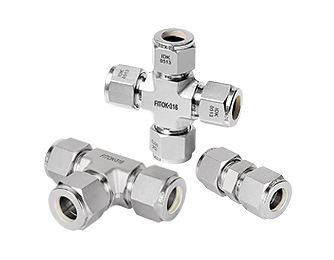
- Allowable Working Pressure: ≥ 450 bar (6,500 psig)
- Working Temperature: -40~120 °C (-40~248 °F)
- Hydrogen-compatible materials
- A minimum of 25 assembly and disassembly cycles while maintaining reliable sealing performance
- Tube ends can be assembled by torque or turns
- Tube ends with a leak rate ≤ 1×10⁻⁹ Ncm³/s
- Match with TMP series instrumentation tubing or tubing that complies with ASTM A269/A213
20D Series
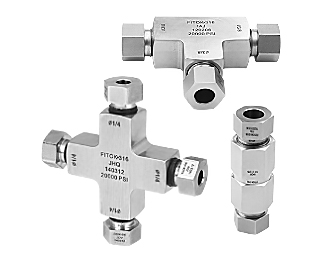
- Max. Working Pressure: 1379 bar (20,000 psig)
- Working Temperature: -40~120 °C (-40~248 °F)
- Hydrogen-compatible materials
- A minimum of 25 assembly and disassembly cycles while maintaining reliable sealing performance
- Tube ends can be assembled by torque or turns
- Tube ends with a leak rate ≤ 1×10⁻⁹ Ncm³/s
- Match with T20D and T20M series medium pressure tubing or equivalent
20M Series
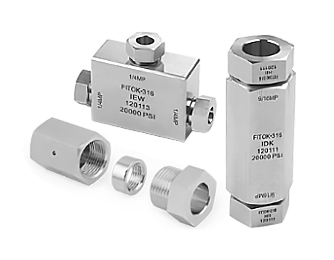
- Max. Working Pressure: 1379 bar (20,000 psig)
- Working Temperature: -40~120 °C (-40~248 °F)
- Hydrogen-compatible materials
- Standard tapered threads
- Tube ends with a leak rate ≤ 1×10⁻⁸ Ncm³/s
- Match with T20M series medium pressure tubing or equivalent
TMP Series
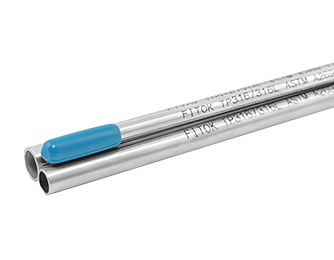
- Max. Working Pressure: 7100 bar (10,200 psig)
- Working Temperature: -40~120 °C (-40~248 °F)
- Hydrogen-compatible materials
- Tube O.D.: 6 mm~12 mm, 1/4"~1/2"
- Complies with ASTM A269 and ASTM A213 standards, featuring tighter tolerances than required by the standards and a maximum hardness that is less than 90% of the upper limit specified
T20D Series
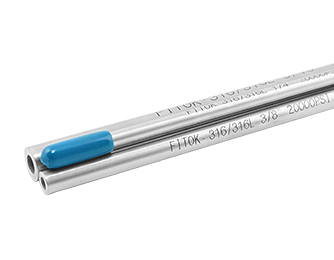
- Max. Working Pressure: 1379 bar (20,000 psig)
- Working Temperature: -40~120 °C (-40~248 °F)
- Hydrogen-compatible materials
- Tube O.D.: 1/4"~1"
- Tighter dimensional tolerances than ASTM A269
T20M Series
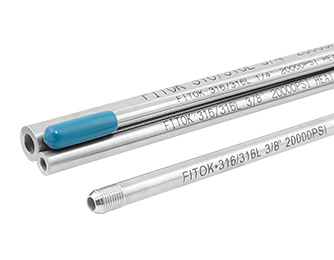
- Max. Working Pressure: 1379 bar (20,000 psig)
- Working Temperature: -40~120 °C (-40~248 °F)
- Hydrogen-compatible materials
- Tube O.D.: 1/4"~1"
- Dimensional tolerance complies with ASME B1.1
BU Series
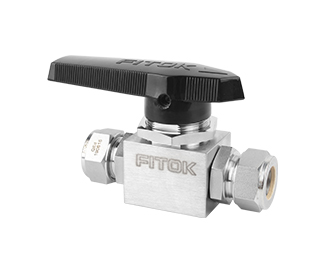
- Max. Working Pressure: 450 bar (6,500 psig)
- Working Temperature: -40~120 °C (-40~248 °F)
- Valve body made from hydrogen-compatible materials
- EC-79 compliant FKM O-ring for reliable performance
- PEEK seat offers exceptional wear resistance and excellent hydrogen compatibility
- Helium leak rate ≤ 1×10⁻⁶ Ncm³/s
CH Series
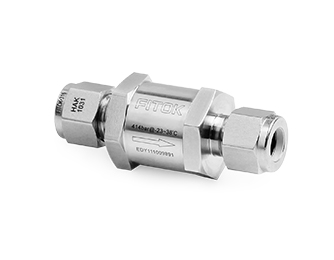
- Max. Working Pressure: 450 bar (6,500 psig)
- Working Temperature: -40~120 °C (-40~248 °F)
- Valve body made from hydrogen-compatible materials
- EC-79 compliant EPDM O-ring for reliable performance
- Multiple cracking pressure ranges are optional, from 0~30 psig
- Mountable in any direction
- Helium leak rate ≤ 1×10⁻⁶ Ncm³/s
FT Series
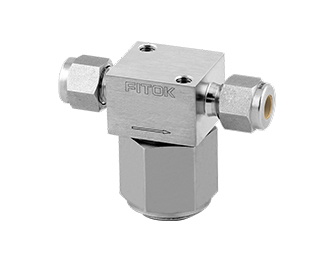
- Max. Working Pressure: 450 bar (6,500 psig)
- Working Temperature: -40~120 °C (-40~248 °F)
- Body made from hydrogen-compatible materials
- Sintered 316 SS filter element
- Helium leak rate ≤ 1×10⁻⁶ Ncm³/s
20CG Series
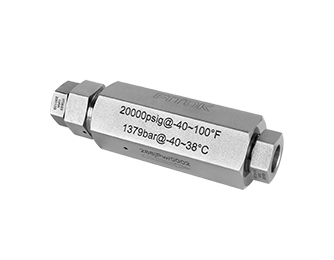
- Max. Working Pressure: 1379 bar (20,000 psig)
- Working Temperature: -40~120 °C (-40~248 °F)
- Hydrogen-compatible materials
- Metal cone sealing structure ensures reliable performance under large pressure differentials and high-flow conditions
- Mountable in any direction
- Helium leak rate ≤ 1×10⁻⁶ Ncm³/s
20N Series
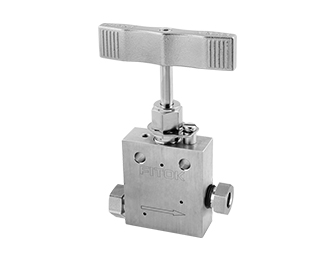
- Max. Working Pressure: 1379 bar (20,000 psig)
- Working Temperature: -40~120 °C (-40~248 °F)
- Valve body made from hydrogen-compatible materials
- Stem tip features a specially treated surface that ensures excellent sealing performance
- XM-19 lower stem for higher strength and enhanced resistance to hydrogen embrittlement
- Helium leak rate ≤ 1×10⁻⁶ Ncm³/s
HHP Series
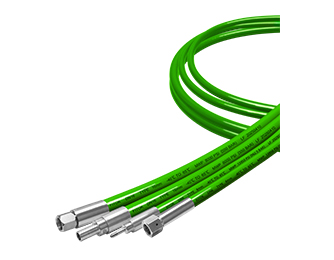
- Max. Working Pressure: 962.5 bar (13,950 psig)
- Working Temperature: -40~85 °C (-40~185 °F)
- Fitting made from hydrogen-compatible materials with a customized POM or PA core for low permeability and excellent hydrogen compatibility
- Nominal Hose Sizes: DN6, DN16
- Helium leak rate ≤ 1×10⁻⁶ Ncm³/s
As the hydrogen energy industry enters a phase of large-scale development, the establishment and implementation of robust certification systems are critical to ensuring high-quality industry growth. FITOK products have been deeply integrated into critical application scenarios across the hydrogen fuel vehicle and hydrogen refueling station value chain. Looking ahead, FITOK will continue to closely track the evolution of global hydrogen standards, drive product upgrades through technological innovation, and empower industry development through comprehensive compliance. The company will further optimize materials, processes, and structural designs to enhance product performance under extreme conditions such as ultra-high pressure, ultra-low temperature, and long-term operation. At the same time, it will expand product categories and application scenarios, working together with global partners to promote the large-scale adoption of hydrogen energy in transportation, energy, and beyond—contributing to the development of a clean, low-carbon future energy system.
To learn more about FITOK products and certifications, please contact FITOK Group or authorized distributors, visit the FITOK official website, or leave a message. Our team will get in touch with you as soon as possible.




